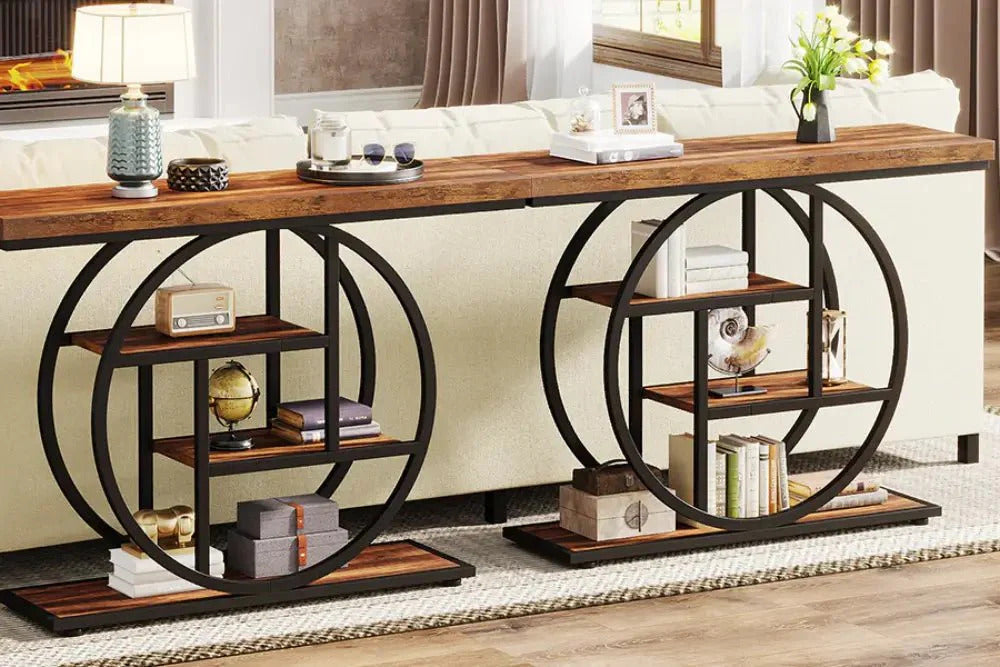


Engineered wood products are manufactured by bonding wood fibres, particles, or veneers with adhesives under heat and pressure. They provide cost-effective and versatile alternatives to solid timber. Common examples include particle board, medium-density fibreboard (MDF), plywood, and oriented strand board (OSB).
In this guide, we break down 12 essential differences between MDF and particle board, helping you choose the most suitable material for furniture and cabinetry in your home.
What Is MDF?
Medium-density fibreboard (MDF) is an engineered wood product made by breaking down hardwood or softwood residues into fine fibres. These fibres are blended with wax and resin, then compressed under high heat and pressure to form dense, smooth panels.
Compared with particle board or plywood, MDF features a more uniform surface, higher density than particle board, and an excellent base for painting or veneering. This makes it a popular choice for modern furniture and cabinetry.

Pros and Cons of Using MDF for Cabinets
Pros
Smooth, Paint-Ready Surface
MDF has a consistent, knot-free texture that accepts paint, laminate, and veneer exceptionally well. This makes it ideal for contemporary cabinets that require a clean, seamless finish.
Dimensional Stability
Unlike solid timber, MDF is less likely to warp, crack, or expand with changes in humidity. Its stability makes it suitable for interiors where temperature and moisture levels fluctuate.
Cost-Effective and Sustainable
Manufactured from recycled wood fibres and by-products, MDF is generally more affordable than solid timber while also making efficient use of raw materials.
Consistent Quality and Easy Workability
Its uniform density allows for precise cutting, shaping, and edge profiling without splintering, making MDF easy to work with for detailed designs.
Flat, Uniform Appearance
With no natural grain or knots, MDF panels look identical, helping achieve a sleek, modern aesthetic.
MDF is also widely used in custom speaker cabinets due to its uniform density, stability, and acoustic performance. Many high-end hi-fi and DIY speakers are made from MDF, then finished with veneer or paint for a refined appearance.
Cons
Poor Moisture Resistance
Standard MDF absorbs water easily, leading to swelling or breakdown if edges are not properly sealed.
Lower Structural Strength
Without natural grain, MDF is not as strong as solid timber or plywood and is more prone to dents under impact.
Fastener Limitations
Screws and nails do not grip as firmly unless pilot holes or specialised fixings are used.
Potential VOC Emissions
Some MDF products contain formaldehyde-based resins, which may release volatile organic compounds (VOCs). Proper sealing and ventilation are important.
Heavy and Dusty to Work With
MDF is heavier than plywood, and cutting it produces fine dust, so protective equipment is recommended.
What Is Particle Board?
Particle board is an engineered wood panel made from wood chips, sawdust, and resin compressed under heat and pressure. Because it utilises wood by-products, particle board is usually cheaper than MDF or plywood and is commonly found in budget furniture and cabinetry.
Its surface is typically finished with laminate, veneer, or melamine to improve durability and appearance.

Pros and Cons of Using Particle Board for Cabinets
Pros
Affordable Choice
Particle board is one of the most economical sheet materials available, making it suitable for budget-focused projects or rental properties.
Lightweight and Easy to Install
Compared with plywood, particle board is lighter, which simplifies handling and installation—especially for wall cabinets.
Smooth, Even Surface
Its flat surface works well with laminates and veneers, allowing manufacturers to replicate timber looks at a lower cost.
Widely Available
Particle board is mass-produced and offered in various thicknesses and finishes, making it easy to source.
Cons
Very Poor Moisture Resistance
When exposed to water, particle board swells and deteriorates quickly, making it unsuitable for damp environments such as kitchens or bathrooms.
Limited Durability
It lacks the strength of plywood or solid timber, so shelves and cabinet bases may sag under heavy loads.
Weak Screw-Holding Ability
Fasteners loosen easily over time, which can affect hinges and drawer runners.
Shorter Lifespan
Although visually acceptable when new, particle board generally wears out faster, particularly in high-use areas.
Potential VOC Emissions
Some particle board uses urea-formaldehyde resin, which may off-gas VOCs. Low-emission boards and sealed edges help reduce exposure.
MDF vs Particle Board — What’s the Difference?
Materials
MDF is made from fine wood fibres mixed with resin and wax, resulting in a dense and uniform core.
Particle board uses larger wood chips and sawdust, creating a coarser internal structure.
Manufacturing Process
MDF fibres are refined and compressed under high heat and pressure, producing smooth, consistent panels.
Particle board is pressed from larger particles, making it quicker and cheaper to manufacture but less dense.
Surface Properties
MDF offers a smooth surface that paints beautifully. Particle board is rougher and usually needs laminate or veneer.
Life Expectancy
MDF generally lasts longer indoors, especially when sealed. Particle board has a shorter service life and degrades faster under stress.
Cost
MDF sits in the mid-price range, while particle board is the most budget-friendly option.
Common Uses
MDF is ideal for cabinet doors, shelves, and decorative panels. Particle board is commonly used for cabinet carcasses and low-cost furniture.
Moisture Resistance
Standard MDF swells when wet, though moisture-resistant versions exist. Particle board performs very poorly with moisture exposure.
Screw-Holding Strength
MDF holds fasteners better than particle board, though pilot holes are still advised.

Workability
MDF machines cleanly and supports detailed shaping. Particle board chips easily and is best for simple constructions.
Weight
MDF is heavier and more stable; particle board is lighter but weaker.
Environmental and VOC Considerations
Both materials may contain formaldehyde-based resins, but low-VOC and certified options are available for indoor use.
Aesthetic and Finishing Options
MDF is ideal for painted finishes and veneers. Particle board requires surface coverings to look presentable.
Load-Bearing Capacity
MDF supports moderate loads; particle board has the weakest load-bearing performance among common engineered woods.
Conclusion
When choosing between MDF and particle board, the right option depends on your priorities. MDF offers a smoother finish, better durability, and greater design flexibility—making it well suited for cabinets and furniture intended to last. Particle board, while more affordable, is best for lightweight or short-term applications where cost is the primary concern.
At Tribesigns, we carefully select materials that balance quality, design, and practicality. Some of our furniture pieces, including shoe cabinets and storage units, incorporate MDF to ensure stability, a refined finish, and compliance with modern standards. If you’re seeking furniture that combines thoughtful design with reliable materials, explore the Tribesigns range to find the right fit for your home.