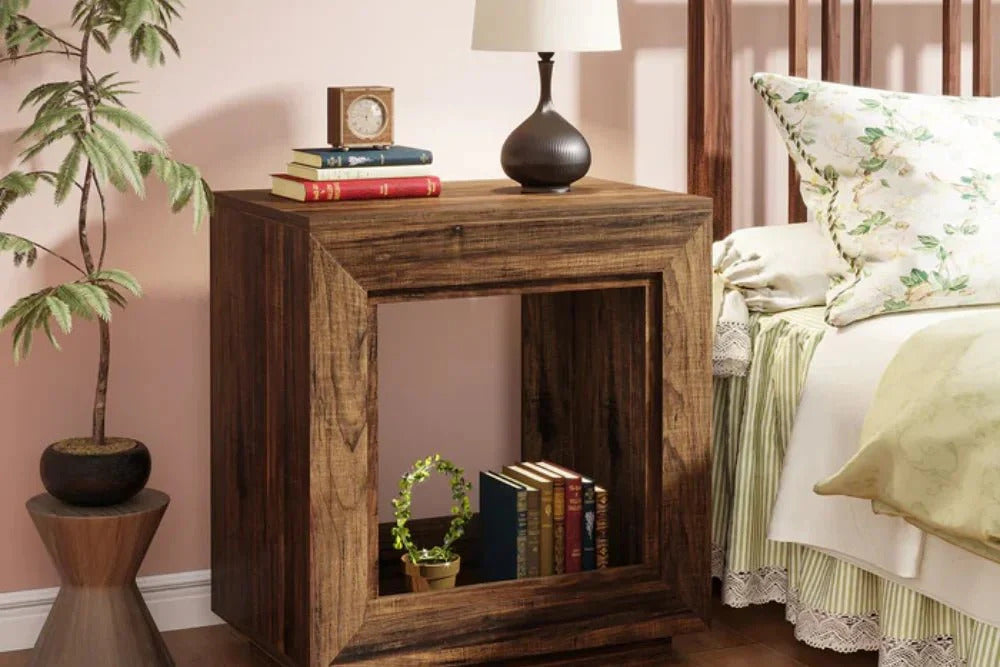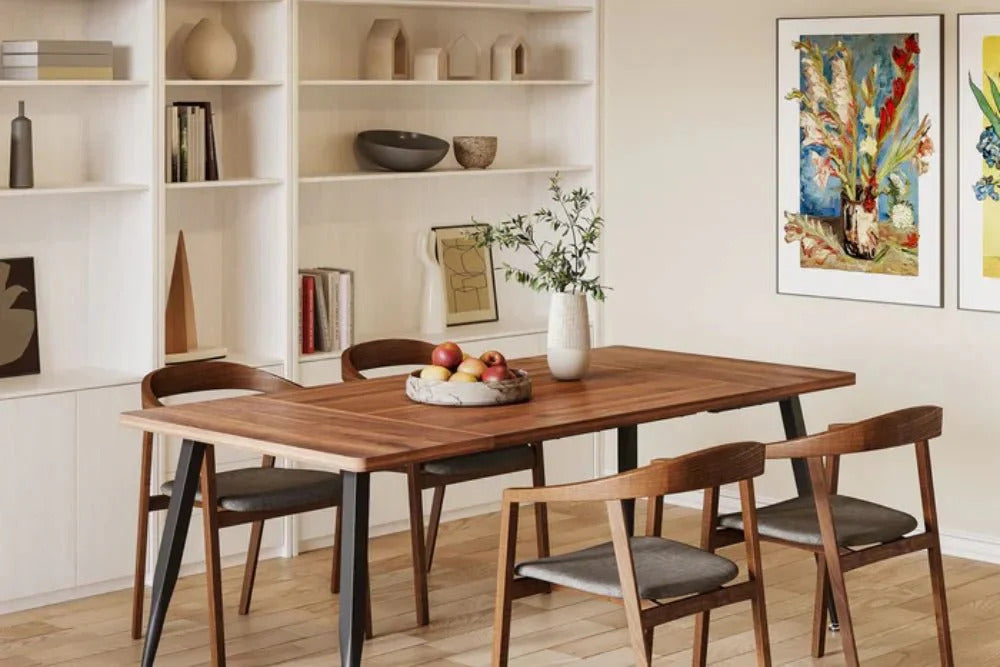


If you’ve ever shopped for furniture, you’ve likely come across the term particle board. It’s one of the most commonly used engineered woods in modern furniture manufacturing, known for being budget-friendly and versatile. But what exactly is particle board, and how does it compare to materials like plywood or solid timber? In this guide, we’ll break down its composition, benefits, and limitations—so you can decide if it’s the right choice for your next piece of furniture.
What Is Particle Board?
Particle board—sometimes called chipboard or low-density fibreboard—is an engineered wood product widely used in furniture and interior design. It’s made by combining small timber particles, such as sawdust and chips, with a resin adhesive. The mixture is then pressed under heat and pressure to create solid panels.

Compared to plywood or solid timber, particle board has a rougher texture, and cut edges often reveal small voids. While it’s sometimes confused with oriented strand board (OSB), the two materials differ: OSB is made with larger flakes and is generally stronger.
As woodworking expert Tim Inman notes, “Particleboard is economical but lacks the strength required for heavy-duty uses.”
Key Characteristics of Particle Board
Affordability and Consistency
Particle board is one of the most cost-effective materials for furniture, cabinetry, and decorative pieces. Its uniform texture makes it easy to work with, especially where a smooth surface is needed. As highlighted by The Spruce, “Particle board’s affordability and consistency in texture make it an ideal choice for budget-conscious projects.”
Surface Treatment and Finish
The board is often laminated or veneered for a more refined appearance. As HomeAdvisor explains, “When finished with veneers or laminates, particle board can effectively mimic the appearance of solid wood, making it an attractive option for furniture.”
Lightweight
Compared to solid timber and plywood, particle board is lighter and easier to move. This makes it suitable for projects that don’t require high strength.
Weaknesses in Moisture Resistance
One of the main drawbacks is its sensitivity to moisture. Untreated boards absorb water easily, which leads to swelling, warping, or discolouration. Tim Inman further notes: “Moisture exposure is particle board’s Achilles' heel. When it gets wet, the material can deteriorate quickly.” For this reason, it’s not typically used outdoors or in humid environments unless sealed.

Advantages of Particle Board
- Cost-Effective: More affordable than MDF or HDF, ideal for flat-pack and mass-produced furniture.
- Easy to Handle: Lightweight and uniform, making it easy to cut, drill, and finish.
- Smooth Surface: Accepts paint, veneers, and laminates well.
- Sustainability: Often made from recycled timber materials, helping reduce production waste.
Drawbacks of Particle Board
- Lower Durability: Not as strong as plywood, MDF, or solid timber.
- Moisture Vulnerability: Prone to swelling and warping when exposed to moisture.
- Shorter Lifespan: May wear out faster than more robust materials.
Types of Particle Board
Plain Particle Board
Plain particle board is the most basic form, created by compressing wood chips and resin into uniform panels. It lacks surface treatments but is commonly used where cost and function take priority. It’s frequently found in low-cost furniture, storage units, and cabinet interiors.
Single Layer Particle Board
This type features a single, uniform layer of compressed wood particles. It’s suited to lightweight applications and is often used for drawer bottoms, partition panels, or the back panels of economical furniture.
Graded Density Particle Board
Graded density boards are engineered with varying densities within the panel—higher density in core sections and lighter density near the surface. This improves screw-holding capacity and durability while maintaining cost efficiency.
As Furniture Today explains, “Graded density particle boards are often used in high-end, cost-effective furniture like desks, bookshelves, or storage units, where the board’s strength is needed but budget constraints remain.”

Melamine Particle Board
Melamine-faced particle board has a durable resin coating, making it popular for cabinetry, furniture, and kitchen applications. The surface is easy to clean, moisture-resistant, and available in a wide range of finishes that mimic timber or stone.
When Is Particle Board the Right Choice?
Particle board works best for budget-friendly furniture and projects that don’t require heavy-duty strength or moisture resistance. In dry indoor environments—such as shelving, desks, and cabinetry—it is a practical, affordable option. However, for projects requiring long-term durability or moisture protection, plywood, MDF, or HDF are more suitable alternatives.
As Woodworking Network suggests, “For large-scale furniture projects where cost efficiency is critical, particle board remains a solid, reliable option—especially when paired with veneers or laminates for added durability.”
FAQ
Is Particle Board Toxic?
Particle board may release small amounts of formaldehyde, particularly if produced with older or low-quality resins. Many modern boards comply with low-emission standards such as E1, reducing indoor air risks. For safer choices, look for formaldehyde-free options.
OSB Board vs Chipboard
OSB is made from large timber strands and offers greater strength, suitable for structural applications. Chipboard (particle board) uses smaller fibres and is mainly used for furniture and non-structural purposes.
When Was Particle Board Invented?
Particle board originated in the late 19th century and became widely commercialised in the 1940s following advancements in resin technology.
What Is Particle Board Used For?
Particle board is commonly used in:
- Cabinetry: Kitchen and bathroom cabinets.
- Furniture: Ready-to-assemble furniture.
- Shelving: Light-duty home or office shelves.
- Countertop Substrates: Bases for laminated benchtops.
- Underlayment: Installed between flooring and subfloors in dry settings.
Conclusion
Particle board offers an affordable and versatile solution for many interior projects. Its lightweight nature and ability to accept a variety of finishes make it a popular choice in modern furniture and DIY builds. However, its limitations in strength and moisture resistance should be considered when planning larger or long-term projects.