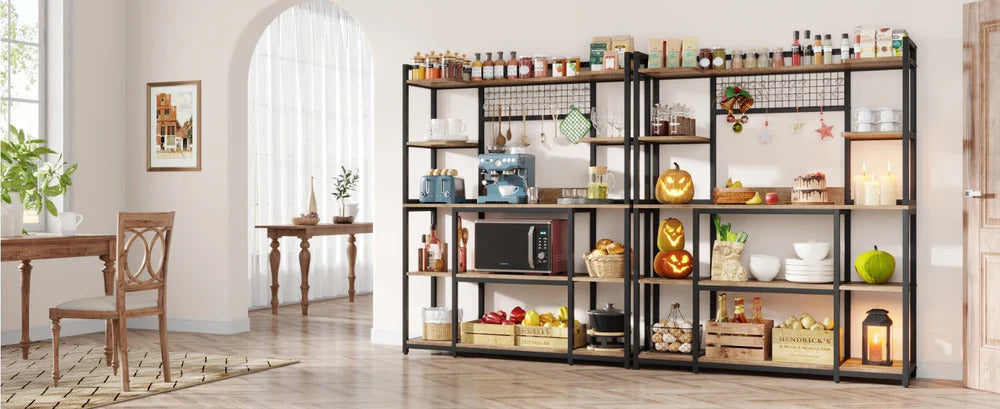


The main engineered wood types in the furniture industry include fibreboard (MDF/HDF), particleboard (PB/OSB), plywood, veneer panels (Melamine/HPL), and specialty boards such as LVL and finger-jointed boards.
Among these, MDF (Medium Density Fibreboard) and plywood are most commonly compared due to their differences in structure, performance, workability, and applications.
Understanding these differences helps you make informed material choices, balancing aesthetics, durability, and cost for furniture, interior design, and woodworking.
What is MDF?
MDF is an engineered wood product made from wood fibres or plant fibres that are broken down, dried, combined with synthetic resin adhesives, and then pressed into panels under high heat and pressure.
Its main feature is a uniform density and fibre structure without visible wood grain or directional properties, making it ideal for painting, veneering, and laminating.

Technical Characteristics:
- Density range: Typically 600–800 kg/m³, providing a smooth and consistent structure for machining and finishing while maintaining sufficient strength for indoor furniture.
- Workability: Easy to cut, mill, and shape without chipping.
- Structural properties: Lower screw-holding capacity compared to plywood or solid timber; limited moisture resistance unless moisture-resistant MDF is specified.
- Environmental rating: E2, E1, or E0 formaldehyde grades depending on adhesives; premium options are often no-added-formaldehyde.
- Common uses: Cabinet doors, interior trims, decorative wall panels, and painted furniture panels.
Drawbacks of MDF:
- Poor moisture resistance: Minor water exposure can cause swelling and permanent damage.
- Lower structural strength: Can sag under heavy loads without reinforcement.
- Weaker screw holding: Fasteners may loosen over time; pre-drilling is recommended.
- Heavier weight: Denser than plywood, making larger items harder to move and assemble.
- Higher adhesive content: Can result in higher formaldehyde emissions if low-emission grades are not used.
What is Plywood?
Plywood is produced by cross-laminating multiple thin layers of wood veneer, usually an odd number, bonded with adhesive. This cross-grain construction increases strength, dimensional stability, and resistance to warping.

Technical characteristics:
- Structure: Available in 3-ply, 5-ply, 7-ply, or more; veneer layers run perpendicular to adjacent layers.
- Strength: Higher bending and tensile strength than MDF, excellent screw-holding capacity.
- Moisture resistance: Better than MDF; marine-grade plywood recommended for wet areas.
- Environmental rating: Uses less adhesive than MDF; formaldehyde emissions depend on glue type.
- Common uses: Cabinet carcasses, tabletops, subfloors, door cores, construction formwork.
Drawbacks of Plywood:
- Visible edges: Layered cross-section requires finishing or edge banding.
- Surface variability: Lower grades may have knots, voids, or patches.
- Higher cost: Generally more expensive than MDF of equivalent size and thickness.
- Cutting challenges: Cross-grain cuts can cause veneer tear-out if not carefully done.
- Susceptibility to delamination: Poor-quality plywood may separate in high humidity if not sealed.
MDF vs Plywood: Performance Comparison
| Feature | MDF | Plywood |
| Strength | Moderate; suitable for light to medium loads | High; suitable for structural use |
| Moisture resistance | Low (unless moisture-resistant MDF) | Better; marine-grade available for high humidity |
| Screw-holding capacity | Moderate; pre-drill recommended | Strong; holds screws securely |
| Surface finish | Smooth and uniform; ideal for painting | Natural wood grain; may require veneer/paint |
| Workability | Easy to cut, route, and shape | Care needed to prevent veneer tear-out |
| Cost | Lower | Slightly higher |
| Environmental impact | Higher adhesive content; choose E0/E1 for low emissions | Lower adhesive content; check glue type |
MDF’s smooth fibre structure makes it perfect for decorative surfaces and painted finishes. Its lack of natural grain allows clean machining without splintering. However, it’s heavier than plywood, can sag under load, and is sensitive to moisture.

Plywood, by contrast, is strong, stable, and lighter. Its layered veneer structure resists warping and holds screws securely. The natural veneer provides a warmer, more organic appearance, though quality may vary by grade.
Many furniture designs, including Tribesigns, combine both: MDF for sleek surfaces, plywood for load-bearing structures.
Formaldehyde Considerations
MDF generally contains more adhesive, so emissions can be higher than plywood. Key points:
- MDF: Uses hot-pressed wood fibres with urea-formaldehyde glue; higher surface area = higher potential emissions.
- Plywood: Uses phenolic or modified MUF adhesives; typically lower emissions.
Regulatory benchmarks (US standards for reference):
- Hardwood plywood: ≤ 0.05 ppm
- Medium-density fibreboard: ≤ 0.11 ppm
- Thin MDF: ≤ 0.13 ppm
Compliant products (CARB/TSCA standards) are safe, but plywood usually meets stricter formaldehyde limits.
Choosing the Right Material for Your Furniture
- For decorative and painted surfaces: MDF provides a smooth, uniform finish. Ideal for cabinet doors, panels, and shoe cabinets.
- For structural strength and durability: Plywood is better for furniture that must withstand heavier loads or moisture exposure.
- For mixed-material designs: Use MDF for aesthetic surfaces and plywood for hidden or load-bearing components — the best balance of cost, performance, and appearance.

FAQ
What is the main difference between MDF and plywood?
MDF: smooth, paint-ready, less strong for heavy loads.
Plywood: cross-layered veneers, strong, stable, and long-lasting.
Is MDF good for cabinets?
Excellent for cabinet doors, shelves, and decorative panels. Consider moisture-resistant MDF or plywood boxes for wet areas.
What materials are used?
MDF: fine wood fibres + wax + resin.
Plywood: thin wood veneers glued with structural adhesives.
Can they be customised in thickness?
Yes, commonly 6mm, 12mm, 18mm, or cut-to-size.
Which is more affordable?
MDF is generally cheaper; plywood costs more but offers better strength and longevity.
Are low-emission or eco options available?
Yes, E0/E1 or no-added-formaldehyde options. Always check emissions and adhesive type.
Conclusion
Both MDF and plywood have their place in modern furniture design. Tribesigns uses each where it performs best: MDF for sleek, decorative finishes and plywood for structural integrity and durability. This approach creates stylish, long-lasting, and cost-effective furniture — from console tables to shoe cabinets — perfectly suited for Australian homes.