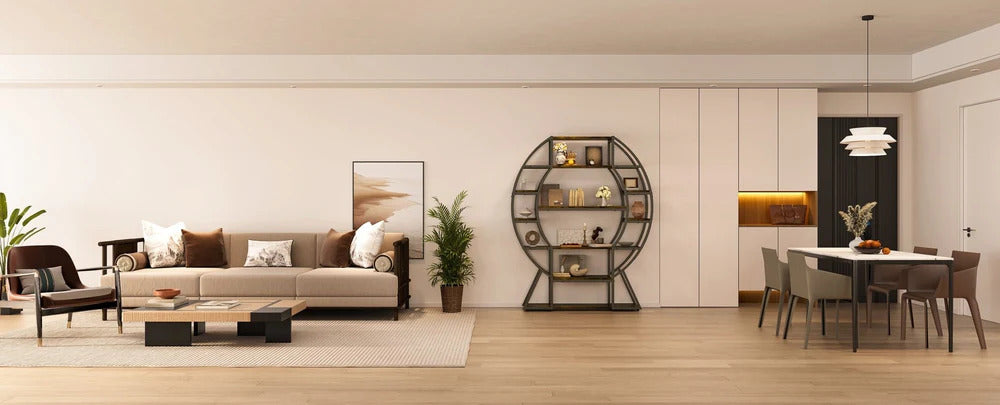


These colours work well because they either add contrast or warmth without clashing with grey’s neutral base. White keeps the space feeling fresh and open. Black adds depth and definition. Light timber softens grey with warmth, while dark timber creates a cosy, grounded feel. Accent colours like navy and sage introduce personality while still feeling calm and refined.
For most homes, the best choice sits within this group—especially when the console table colour complements the tone of the grey furniture and the overall style of the room.
Best Console Table Colours to Pair with Grey Furniture
Grey furniture is popular in Australian homes because it’s neutral, modern, and easy to style. That flexibility, however, can make choosing a console table feel less straightforward.
Here’s how different console table colours work with grey furniture and what effect they create in a room.
White
Best paired with mid-tone or dark grey furniture. White brightens the space and adds clarity, but can feel a little stark if the room already features a lot of white.
Black
Works best with light or medium grey. Black creates strong contrast and a contemporary look, though it can feel heavy in rooms with limited natural light.
Light Timber
Suitable for almost any shade of grey, particularly cool greys. Light timber adds warmth and keeps the room feeling relaxed. Be mindful of mixing too many timber tones, which can make the space feel busy.
Dark Timber
Pairs well with light grey furniture. It adds richness and a cosy atmosphere, but usually needs good natural light to avoid making the room feel dark.
Navy
Complements cool or neutral greys. Navy introduces a calm pop of colour and works best when echoed elsewhere in the room, such as in cushions or artwork.
Sage or Soft Green
Works with both warm and cool greys. These shades feel natural and refreshing, though they may appear muted in darker rooms.
Glass or Metal
Suitable for any grey. Glass and metal keep the space light and open, although glass surfaces can show fingerprints more easily.

How to Choose the Right Console Table Colour
Step 1: Identify Your Shade of Grey
Start by looking at whether your grey furniture is light or dark. Light grey works well with deeper or warmer console table colours, while dark grey usually benefits from lighter elements to keep the room feeling open.
Next, consider undertones. Cool greys lean blue and pair nicely with white, black, light timber, and cooler accent colours. Warm greys have beige or taupe undertones and tend to work better with cream finishes, warm timber, brass, or earthy tones.
Step 2: Decide on the Mood
Think about how you want the room to feel overall.
For a cosy, welcoming space, timber tones and earthy colours are ideal.
For a clean, modern look, white, black, metal, or glass work well.
For added personality, colours like navy, sage, or blush can bring interest without overpowering the space.
The feeling you want matters more than rigid design rules.
Step 3: Consider What’s Already in the Room
Look at your flooring, wall colour, and larger furniture pieces. A console table feels more cohesive when it visually connects with what’s already there.
If your floors are light timber, a similar timber console blends in effortlessly. If your room includes black metal accents, a black console table will feel intentional. When choosing a statement colour, repeat it elsewhere—through cushions, artwork, or decorative objects—so the console doesn’t feel out of place.
Timeless Console Table Colours That Work with Grey Furniture
White
A white console table brings brightness and balance to a room with grey furniture. It works particularly well with darker grey sofas and helps keep the space feeling open. Styled with a lamp, books, or artwork, it becomes an easy focal point.
Black
Black creates crisp contrast against light grey furniture and suits modern interiors. Adding lighter décor or warm textures on top prevents it from feeling too stark.
Grey on Grey
Matching grey tones can feel calm and cohesive when done thoughtfully. Texture is key—use timber trays, ceramics, or soft fabrics to keep the look from feeling flat.
Light Timber
Light timber softens grey furniture and suits relaxed interiors. It pairs naturally with plants, linen, woven baskets, and other organic textures common in Australian homes.
Medium to Dark Timber
Darker timber tones create warmth and visual depth. They work best in rooms with good daylight and feel especially balanced when repeated in shelving, frames, or décor.
Metal and Glass
Metal and glass console tables are ideal for smaller spaces. Black metal works well with most greys, chrome complements cool greys, and brass adds warmth to warmer grey tones. Glass tops help maintain an open, airy feel.
Mixed Materials
Console tables that combine timber and metal help bridge different elements in the room. A timber top with metal legs, for example, connects grey upholstery with black fixtures or natural textures without overwhelming the space.

Accent Colours for Added Personality
Navy
Navy adds depth without overpowering grey furniture. It feels calm, stylish, and works beautifully with brass or timber accents.
Sage and Green Tones
Sage feels fresh and natural, while olive or forest green adds a little more drama. These colours suit spaces with indoor plants or natural finishes.
Blush, Terracotta, and Rust
These warmer shades soften grey and make a space feel inviting. Blush is subtle and gentle, while terracotta and rust bring an earthy, grounded feel.
Bold Colour Choices
Grey furniture provides a great base for bolder colours. Mustard, teal, or berry tones can work well when the rest of the room remains relatively simple.

Common Styling Mistakes to Avoid
Using too much grey without contrast can make a room feel flat. Break it up with timber, metal, or colour.
Mixing greys with conflicting undertones can feel visually off—cool and warm greys don’t always sit well together.
Choosing a console table colour that isn’t repeated elsewhere can make it feel random. Echo the colour through décor to give it purpose.